
Let’s be real. If you’re a guy who spends hours hunched over a laptop, or perhaps you just finished your 30th set of chest presses this month, your posture might be fighting back. It happens to all of us. You look in the mirror sometimes and think, “Wait, is my head supposed to stick out that far?” That forward slouch, those rounded shoulders it’s not just about looking better, though that’s definitely a nice bonus. It’s about how your whole body works, from your energy levels to that constant ache in your lower back.
The good news here is that fixing years of bad habits does not need to feel like a full-time job. With a few smart, focused postural correction exercises, you can start easing that tension and standing taller. It’s truly amazing how a little strength in the right places can make a huge difference in how you feel daily.
Why We Get Slouchy: The Common Posture Killers
Our modern lifestyle pretty much guarantees we develop muscle imbalances. We tend to sit too much, drive too much, and look down at our phones a lot. For men specifically, the common posture pitfalls usually fall into three types. Sometimes you have one, sometimes you have a mix, but knowing the kind of imbalance you have is the first step toward correcting it.
1. Forward Head Posture (The “Tech Neck”)
Your head weighs about as much as a bowling ball, maybe 10 to 12 pounds. When it sits right over your shoulders, your neck muscles handle that weight easily. But when you poke your chin forward say, while watching a screen the stress on your neck triples, or even more than that. This causes those chronic headaches and tightness right at the base of your skull.
2. Rounded Shoulders (The “Desk Hunch”)
This is super common. When you sit and type, the muscles in your chest (pectorals) get tight and short, pulling your shoulders forward. Meanwhile, the muscles in your upper back (rhomboids and mid-traps) get long and weak. This is a big reason why lifting weights might feel harder than it should; your back just isn’t prepared to hold position.
3. Swayback (The Lower Back Arch)
Known formally as lumbar lordosis, this happens when your pelvis tilts too far forward. It makes your butt stick out a bit and gives you a noticeable arch in your lower back. This often comes from having weak core and glute muscles, combined with very tight hip flexors (the front of your hips) from sitting all day. If your lower back always feels tight and pinched, this might be the culprit.
The Blueprint: Targeted Postural Correction Exercises
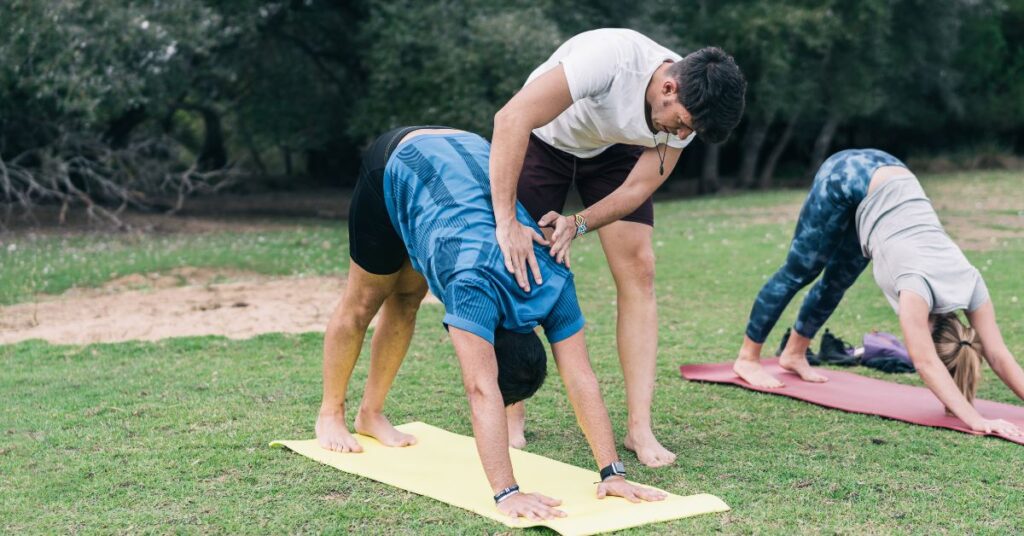
You need two things to fix bad posture: You have to stretch the tight muscles, and you have to strengthen the weak ones. Here are some of the most effective postural correction exercises you can easily add to your routine. Focus on slow, controlled movements.
For Forward Head Posture: Chin Tucks
This exercise is simple but powerful for strengthening the deep neck flexors the small, weak muscles that keep your head stable.
- How to do it: Sit up straight or stand against a wall with your feet hip-width apart. Look straight ahead. Now, gently pull your chin straight back, like you’re trying to make a “double chin.” Keep your eyes level. You should feel the back of your neck lengthening.
- Sets and Reps: Hold the position for 5 seconds. Relax. Repeat 10 times. Do this exercise 2 or 3 times a day.
For Rounded Shoulders: Scapular Retractions (Shoulder Blade Squeezes)
This targets the weak upper back muscles that need to pull your shoulders back and down.
- How to do it: Sit or stand tall. Let your arms hang easily at your sides. Focus only on your shoulder blades. Gently squeeze them together, as if you are trying to pinch a pencil between them. Do not shrug your shoulders up toward your ears.
- Sets and Reps: Hold the squeeze for 5 to 10 seconds. Release slowly. Do 3 sets of 15 repetitions.
For Rounded Shoulders: Doorway Chest Stretch
Since your chest muscles are likely tight, they need to be lengthened to allow your shoulders to move back naturally.
- How to do it: Stand in an open doorway. Place your forearms on the frame of the door, elbows bent at a 90-degree angle (like goalposts). Step one foot forward slowly, gently leaning your body through the doorway until you feel a stretch across your chest and the front of your shoulders.
- Sets and Reps: Hold this stretch for 30 seconds. Repeat 3 times.
For Swayback/Tight Hips: Couch Stretch
This is one of the best stretches for releasing tight hip flexors that pull your pelvis out of alignment.
- How to do it: Kneel on the floor in front of a couch or chair. Place one shin flat against the wall (or the back of the couch). The corresponding knee should be touching the floor. Bring the other foot forward into a lunge position. Gently tuck your pelvis slightly upward to increase the stretch on the front of the thigh and hip of the back leg. You will feel a serious stretch.
- Sets and Reps: Hold for 1 to 2 minutes per side.
For Overall Core Support: Wall Angels
This exercise improves mobility in your thoracic spine (mid-back) and helps you learn what good shoulder position feels like.
- How to do it: Stand with your back against a wall. Your feet should be about 6 to 12 inches away from the wall. Press your tailbone, shoulders, and the back of your head gently against the wall. Raise your arms out to the sides with your elbows bent, palms facing forward. Try to keep your wrists, elbows, and back of your head touching the wall, then slowly slide your arms up the wall and then back down.
- Sets and Reps: Do 10 slow repetitions. Aim for 2 sets. If your elbows or wrists lift off the wall, you moved too fast or went too far.
Postural Correction Exercises: Quick Reference Table
| Target Area | Problem | Recommended Exercise | Goal |
| Neck/Upper Back | Forward Head/Tech Neck | Chin Tucks | Strengthens deep neck muscles. |
| Chest/Shoulders | Rounded Shoulders | Doorway Stretch | Lengthens tight chest muscles. |
| Upper Back | Hunching/Weakness | Scapular Retractions | Strengthens mid-back muscles. |
| Lower Back/Hips | Swayback/Tight Hips | Couch Stretch | Releases hip flexor tightness. |
| Overall Mobility | Poor Shoulder Alignment | Wall Angels | Improves upper back and shoulder mobility. |
Key Takeaways for Daily Life
It isn’t enough just to do these postural correction exercises for 10 minutes a day. You have to change how you spend the other 23 hours.
- Set a Timer: Put a reminder on your phone to go off every 30 minutes while you work. When it buzzes, take a 60-second break. Stand up, do 5 Chin Tucks, or squeeze your shoulder blades.
- Ergonomics Check: Make sure your monitor is at eye level, which will naturally help with the Forward Head posture. Your feet should be flat on the floor, and your low back should have some support, perhaps from a simple lumbar roll or cushion.
- Move More Often: Honestly, even the best posture will fail if you sit for too long. No single position is perfect forever, I suppose. Just stand, walk to the kitchen, or stretch every chance you get.
Frequently Asked Questions (FAQs)
A: It’s slow going, often. You should feel a difference in pain and muscle fatigue within a few weeks, but visible changes usually take 1 to 3 months of consistent work. Since your spine and muscles are used to the poor position, it takes time and real effort to train them to hold the new position. You have to be patient with the process.
A: Maybe, but possibly not long-term. Most experts suggest devices like harnesses or braces are best used for short periods or not at all. They hold your muscles in place for you, which means your own muscles don’t need to get stronger. It’s better to use digital reminders that prompt you to consciously correct your position using your own muscle strength.
A: Yes, you can still lift, but you might need to adjust things. Avoid lifts that rely heavily on the muscles you are trying to stretch (like excessive bench pressing) and focus on lifts that strengthen the back, like rowing variations and face pulls. Ask a trainer or a physical therapist, perhaps, to check your form on major compound lifts, as poor form can make imbalances worse very quickly.
A: Strangely enough, yes. Research shows that standing or sitting in an upright, open position can actually boost feelings of power and self-assurance. When you slouch, it can signal stress or negativity to your brain, making you feel less confident. Standing tall truly does make you feel better about yourself.
For more blogs like this, visit our home page.
Leave a Reply