
It seems like every guy today is obsessed with “Low T.” We are constantly bombarded with ads and articles suggesting that low energy, declining libido, or even just feeling a bit “off” means we need to boost our testosterone levels. The market for supplements and hormone therapies thrives on the idea that maximum output equals peak masculinity and health. Because of this focus, we often spend so much time worrying about feeling deficient about general malaise and fatigue that we completely overlook a fundamental truth about hormone health: it’s not a game of maximization. The real goal, perhaps surprisingly, is balance, not just pushing one number as high as it will go.
The perception of high testosterone is often skewed. In popular culture and sometimes even in the gym, having “high T” is seen as a badge of honor, synonymous with physical dominance and relentless drive. But the clinical reality of pathologically high testosterone levels levels far beyond what nature intended presents a much different, much darker picture. Testosterone is certainly essential for male development, libido regulation, bone health, and maintaining muscle mass. However, when levels soar out of control, either naturally (though rarely) or due to external factors (which is far more common), too much of this powerful hormone can seriously increase the risk of significant health problems, including cancer, cardiovascular disease, and infertility.
What exactly do doctors mean when they talk about “high T”? Clinically, abnormally high levels of reproductive hormones, including testosterone, caused by the excessive activity of the gonads (testes) are known as hypergonadism. This condition is far less common than its counterpart, hypogonadism (low T). When we discuss the alarming high testosterone symptoms male experiences, it’s important to understand the context.
The difference between a healthy, naturally high level and a dangerous, pathological level is key. Testosterone levels vary dramatically across the population, even in healthy, non-obese men between 19 and 39 years old. The widely accepted harmonized normal range in this demographic is about 264 to 916 nanograms per deciliter (ng/dL). Some men naturally sit at the high end of this range, around 850 or 900 ng/dL, and they generally experience the positive benefits associated with the hormone. But when we start talking about the most severe, often life-threatening symptoms and risks, we are discussing levels that are pathologically above that range, or dangerously high levels caused by the introduction of synthetic hormones or anabolic steroids.
This article, then, is designed to serve as a critical guide. It is meant to help men distinguish between feeling naturally robust and exhibiting legitimate high testosterone symptoms male needs to recognize. It aims to reveal the often hidden, underlying risks associated with hormonal excess risks that can be quite serious, like elevated blood pressure or, more acutely, blood clots. This knowledge is critical because if the high T comes from external sources, the risk of serious complications, including cardiac issues, significantly increases.
Physical Indicators When Your Body Overdoses on Androgen
One of the most noticeable ways the body signals a testosterone overload is through highly visible physical changes. These shifts happen because androgens the group of hormones that includes testosterone act as powerful stimulators for many physical processes throughout the body.
Skin Changes: The Acne Spike and Oily Overdrive
Perhaps the most common and persistent of the high testosterone symptoms male individuals report is a sudden or persistent onslaught of skin problems. High levels of testosterone strongly stimulate the production of sebum, which is the oily, waxy substance secreted by the skin’s sebaceous glands that lubricates the skin and hair. When the androgen signal is too strong, the glands become overactive, leading to excessively oily skin and increased sweating. This excess sebum production is why severe, persistent acne is a classic marker of elevated androgen levels, mimicking the sudden hormonal spike that teenagers experience during puberty. This is not just a cosmetic annoyance; it’s a clear biofeedback signal that something is pushing the system far beyond its comfortable range.
Hair Dynamics: The Confusing Link Body vs. Scalp
The relationship between high T and hair is often misunderstood, perhaps even contradictory. On one hand, excessive body hair growth (known clinically as hirsutism) is absolutely a classic sign of excessive androgen activity. DHT, the potent metabolite of testosterone, actively encourages the growth of coarse body and facial hair.
On the other hand, the effect on scalp hair is a major source of confusion. Many men who want to boost T levels fear hair loss, and high T is often linked generally to baldness. However, high testosterone itself is not the direct cause of male pattern baldness. The actual connection lies entirely with Dihydrotestosterone (DHT). Here’s how that crucial mechanism works:
Only about 10% of the testosterone circulating in the bloodstream is converted into DHT by the enzyme 5-alpha reductase. It is this DHT that affects specific hair follicles. For men who possess the genetic predisposition for male pattern baldness, their scalp follicles are inherently oversensitive to DHT. When DHT binds to these specific sensitive receptors, it triggers a process called “miniaturization,” causing the follicles to gradually shrink over successive hair cycles until they eventually stop producing hair. Therefore, high T levels simply provide a larger volume of substrate more fuel for the DHT conversion process, which then accelerates hair loss only if the man has the underlying genetic tendency for it. This distinction is vital for understanding that the high testosterone symptoms male experiences are highly individualized based on their specific genetic makeup, determining why one man may get acne and body hair but keep his scalp hair, while another experiences full hair loss.
Muscle and Mass: The Point Where Gains Become Concerning
One of the most appealing aspects of high T, particularly for the fitness enthusiast, is enhanced muscle development. Androgens stimulate the androgen receptors in skeletal muscle, which undeniably leads to improved physical strength and rapid increases in muscle mass.
However, not all weight gain associated with high T is muscle. Men with pathologically high levels should be wary of other physical manifestations, particularly those involving fluid balance. High testosterone symptoms male can include unexplained weight gain and noticeable swelling of the legs and feet, often referred to as edema or ankle swelling. This fluid retention can be an uncomfortable side effect and, more importantly, may be an early warning sign of systemic cardiovascular issues or high blood pressure that warrant immediate medical evaluation.
In addition to visible symptoms, high blood pressure (hypertension) and frequent headaches are commonly listed high testosterone symptoms male may experience.
The Mind Game – Mood, Energy, and Behavioral Symptoms

Testosterone is not just a physical hormone; it profoundly impacts the central nervous system, affecting mood, emotional control, and sleep patterns. When levels are excessively elevated, the psychological and behavioral changes can be some of the most disruptive high testosterone symptoms male faces.
The Short Fuse: Aggression, Irritability, and Mood Swings
An elevated level of testosterone can certainly push a man’s emotional state past the point of healthy assertiveness. High T levels, particularly once they have been raised past the normal physiological ceiling, can directly cause increased irritability and outright angry mood swings. We aren’t simply talking about feeling more driven or energetic, we’re describing a measurable shift toward instability and emotional volatility. Varying T levels can also cause anxiety and general mood swings.
The most extreme forms of aggression and risk-taking behaviors are strongly associated with pharmacological excess meaning the misuse of synthetic hormones or anabolic steroids. This is the context that gives rise to the infamous phenomenon of “steroid rage.” Evidence suggests that taking excess testosterone, such as through anabolic steroid abuse, is linked to a notable increase in aggression and acute irritability. While men with naturally high-normal testosterone might notice initial fluctuations in energy and mild irritability, the severe, dangerous aggression is almost always a result of pushing the body into a state of severe hormonal overload through external substances. This information helps the public to correctly understand the dangers of pharmaceutical misuse.
Energy and Drive: Insomnia and Heightened Libido
The drive that high T provides can manifest in counterproductive ways. For example, high testosterone levels can profoundly disrupt the normal circadian rhythm and interfere with natural sleep cycles, leading to significant sleep disturbances and chronic insomnia. This chronic inability to fall asleep or stay asleep is often deeply draining, which is the exact opposite of the revitalized feeling men generally seek when optimizing hormones.
Additionally, a significant increase in sex desire, or libido, is perhaps one of the most recognized high testosterone symptoms male experiences. While a healthy sex drive is a positive sign of hormonal function, a disproportionately heightened or seemingly relentless desire especially when coupled with the physical and behavioral markers discussed here can be a clear indicator of hormonal imbalance.
There is often an undercurrent of mental restlessness that accompanies this hormonal excess. The constant sense of being “keyed up” or excessively energetic can sometimes transition into chronic, low-grade restlessness a feeling of being constantly “on edge”. This state is often draining and exhausting, rather than genuinely vitalizing.
Reproductive Health and Urinary Warning Signs
When testosterone is pathologically high, the body’s finely tuned systems start to malfunction, leading to problems in fertility and urinary function. These are often the most paradoxical and serious of the high testosterone symptoms male can encounter.
The Paradox of Fertility: Shutting Down Production
The most surprising consequence of excessive testosterone, particularly in the context of exogenous use (testosterone injections or steroids), is the complete reversal of its expected reproductive function. Rather than boosting fertility, too much testosterone actually suppresses the body’s natural sperm production, resulting in low sperm count and, critically, infertility.
The mechanism behind this is rooted in the body’s highly efficient feedback loop, known as the Hypothalamic-Pituitary-Gonadal (HPG) axis. When excessive testosterone is introduced into the system especially from an external source the brain and pituitary gland immediately sense the overload. To correct this, the brain stops releasing Luteinizing Hormone (LH) and Follicle-Stimulating Hormone (FSH). These pituitary hormones are the chemical messengers essential for signaling the testes to produce both testosterone and sperm. By suppressing LH and FSH, the body attempts to reduce the total hormonal load, but in doing so, it effectively puts sperm production into a deep freeze, sacrificing fertility in the process.
Prostate Pressure: BPH and Urinary Issues
Another major concern when considering high testosterone symptoms male should look out for relates to the prostate gland. Excess T, and its potent metabolite DHT, are known to stimulate the growth of the prostate. Chronic excess can lead to the enlargement of the prostate gland, a condition known as Benign Prostatic Hyperplasia (BPH).
An enlarged prostate can put pressure on the urethra, which runs through its center, causing significant issues with the urinary system. Men may experience difficulty passing urine and other common urinary problems, such as urine retention. This complication is a significant clinical risk associated with long-term, unmanaged high T levels.
High Testosterone Symptoms Male: A Quick Overview
| Symptom Category | Common Manifestations | Mechanism/Impact |
| Physical Appearance | Severe, persistent acne, excessive body hair, rapid muscle growth, oily skin, unexplained weight gain/edema. | Stimulated sebaceous glands; increased androgen receptor activity; potential fluid retention. |
| Dermatological (DHT) | Scalp hair loss/thinning (requires genetic tendency). | Dihydrotestosterone (DHT) induced miniaturization of sensitive hair follicles. |
| Behavioral & Mood | Aggression, persistent irritability, sudden mood swings, insomnia, risk-taking behavior. | Central nervous system effects; often linked to pharmacological excess. |
| Reproductive & Urinary | High sex drive (libido), difficulty urinating, low sperm count, infertility. | Suppression of the natural hormonal axis; Benign Prostatic Hyperplasia (BPH) risk. |
| Cardiovascular Warning | Frequent headaches, high blood pressure (Hypertension), swelling of the feet. | Systemic strain on the cardiovascular system and fluid retention. |
The Clinical Deep Dive – Understanding the Serious, Hidden Risks
While acne and mood swings are inconvenient high testosterone symptoms male needs to recognize, the true danger lies beneath the surface in the cardiovascular and liver systems. These systemic risks are why medical supervision is mandatory for anyone considering hormone therapy or monitoring naturally high levels.
Blood, Clots, and Cardiovascular Risk: The Danger of Thick Blood (Polycythemia)
High blood pressure (hypertension) is repeatedly identified as a potential side effect of elevated testosterone levels. Hypertension, as is well known, is a key predisposing factor for the future incidence of cardiovascular disease (CVD). However, there is a more insidious, silent threat that high testosterone poses to the cardiovascular system: the thickening of the blood.
This condition is known as Polycythemia or Erythrocytosis, which means an elevated hematocrit (the percentage of blood volume made up of red blood cells). Testosterone, especially when administered in high doses or at excessive concentrations, acts as a powerful stimulus for erythropoiesis the production of new red blood cells. The mechanism is complex: the hormone causes an initial spike in erythropoietin (EPO), which drives red blood cell creation, and simultaneously decreases hepcidin, a master iron regulator.
The result is dangerously “thick blood,” which increases the viscosity of the blood. This increased viscosity significantly raises the risk of thrombosis, or the formation of dangerous blood clots. Clots can lead directly to serious and potentially fatal cardiovascular events, including stroke or myocardial infarction (heart attack). Clinical evidence highlights that drastic elevations of hematocrit may be detrimental, especially in patients who already have underlying coronary, cerebral, or peripheral vascular disease. This risk is so significant that for men undergoing testosterone therapy (TRT), regular monitoring of hematocrit levels is a mandatory part of medical management to prevent this hidden threat. If the hematocrit cannot be controlled by reducing the dose, doctors may need to recommend therapeutic phlebotomy (the clinical removal of blood, similar to donation) to reduce the viscosity and mitigate the clotting risk.
Liver Strain: Tumors and Jaundice
Another area of serious clinical concern involves the liver. High testosterone symptoms male experiences due to pathologically high levels, particularly those induced by synthetic hormones, can include serious hepatotoxicity.
This risk is primarily associated with the misuse of synthetic, often oral, anabolic steroids or other exogenous testosterone sources taken at very high doses. These synthetic compounds can be highly toxic to the liver. Serious complications reported include cholestatic jaundice and the development of hepatic adenoma (a tumor on the liver). When synthetic or pharmacological interventions are involved, the progression of high T symptoms can go quickly from concerning to acutely life-threatening, making professional management non-negotiable.
Why T Levels Skyrocket – Causes Beyond the Norm
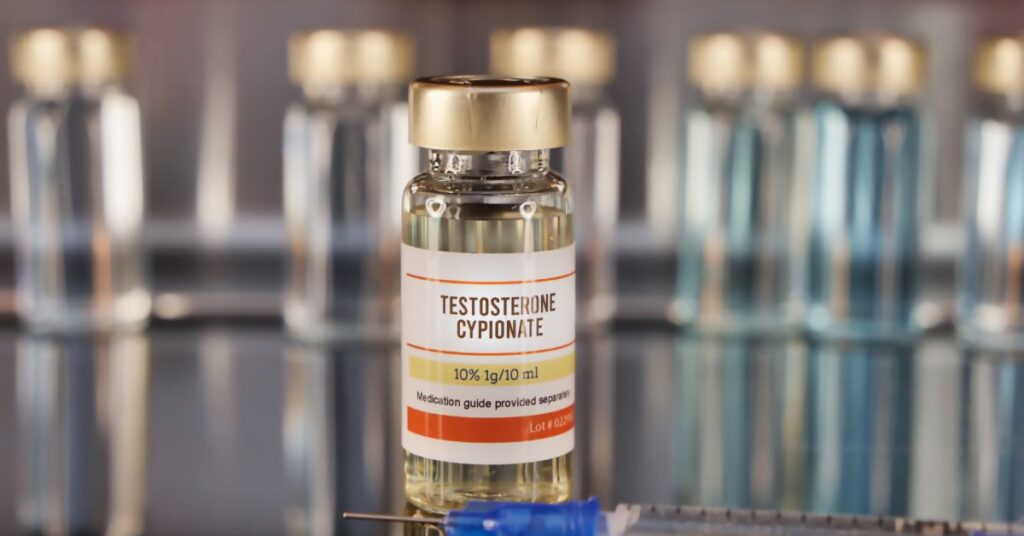
To correctly address high testosterone symptoms male individuals exhibit, it is vital to identify the source of the excess. The causes generally fall into two distinct categories: exogenous (external) and endogenous (internal). It is critical to repeatedly distinguish the high testosterone symptoms male resulting from natural, high-normal variation from the pathological excess caused by synthetic steroids or tumors, as the risk profiles are vastly different.
The Big Culprit: Exogenous Sources (Outside T)
For adult men, the single most common cause of pathologically dangerous T levels is the introduction of external hormones. This includes the misuse of anabolic steroids, which are synthetic variations of testosterone. Athletes and bodybuilders often misuse these synthetic compounds in very high doses in an attempt to boost performance or drastically change their physical appearance. Such high doses push testosterone levels far beyond the body’s natural tolerance, leading to the rapid onset of the most severe clinical risks, including aggression and cardiovascular complications.
A less dramatic, but still relevant, exogenous cause is Testosterone Replacement Therapy (TRT) that is poorly monitored or improperly dosed. While TRT is necessary and beneficial for many men with genuinely low levels, if the dose is too high or monitoring check-ins are insufficient, T levels can rise into the dangerous zone, triggering adverse effects like polycythemia and hypertension. In fact, most serious cases of high testosterone are caused by steroid or hormone therapy rather than an underlying medical condition.
Internal Drivers: When the Body Misbehaves (Endogenous Causes)
While less frequent than external misuse, pathologically high T can arise from the body’s own systems malfunctioning.
The most serious internal causes are Tumors. Although rare, tumors located in the testes or the adrenal glands can autonomously produce large amounts of testosterone or related precursor hormones. This uncontrolled overproduction causes a major hormonal imbalance.
In some instances, Genetic Factors play a role. Some men are simply genetically predisposed to produce testosterone at the very upper limits of the normal range. These naturally high-normal levels (e.g., in the 800s or 900s ng/dL) are generally not associated with the severe, life-threatening clinical risks such as liver toxicity or massive blood clots that are hallmarks of true pharmacological or tumor-driven excess.
Lifestyle Context: The Temporary Push
It is important to qualify that certain lifestyle factors can temporarily raise testosterone levels, but they rarely push them into the pathological danger zone. Intense, chronic exercise or insufficient sleep can cause temporary spikes. Dietary factors, like high intake of processed sugars and unhealthy fats, may also interfere with hormonal regulation. However, these factors, by themselves, are highly unlikely to cause the sort of hormonal excess that necessitates therapeutic phlebotomy or causes hepatic adenoma.
What to Do Next – Diagnosis and Seeking Help
If a man recognizes multiple persistent high testosterone symptoms male associated with excess such as severe acne, uncontrolled mood swings, difficulty urinating, or unexplained swelling the next steps must involve professional medical evaluation. Self-diagnosis or self-treatment in this domain is highly dangerous, given the underlying risks involved.
The Crucial First Step: Blood Tests
The foundation of diagnosis is simple blood work. A healthcare provider will order tests to measure Total Testosterone and, perhaps, Free Testosterone to determine if levels are truly elevated.
Understanding Secondary Checks: Determining the Source
Once elevated T is confirmed, a skilled physician or specialist will need to determine the source of the excess. This requires additional, sophisticated hormone tests, specifically measuring Luteinizing Hormone (LH) and Follicle-Stimulating Hormone (FSH).
The interpretation of these secondary hormones provides crucial diagnostic power. If testosterone levels are confirmed to be high, but the corresponding LH and FSH levels are low, this creates a clear picture. Low LH and FSH mean the brain has already sensed the excess T and has shut down its signaling system (the HPG axis). This pattern strongly suggests that the high T is coming from an outside source (like synthetic steroids) or, less commonly, from a tumor in the testes or adrenal glands. The ability to understand this specific T/FSH/LH relationship empowers the patient to understand the medical reasoning behind the diagnosis and ask highly informed questions about their condition.
When to Call in the Specialist: The Endocrinologist
While a primary care physician (PCP) can handle initial testing and management of minor hormonal fluctuations, complex or pathologically high hormonal imbalances require specialist expertise. An endocrinologist is the hormone specialist best equipped to manage these conditions. They are experts in interpreting the entire endocrine system, recommending and interpreting lab tests, and determining the appropriate path forward, whether that involves investigating a tumor, adjusting complex hormone replacement protocols, or addressing fertility issues. Seeing an endocrinologist ensures the patient receives the most current and knowledgeable care available for managing hormonal issues, which is necessary when facing the risks of hypergonadism.
Treatment Overview
Treatment for high testosterone symptoms male always hinges entirely on the root cause.
- Exogenous Causes: If the excess is due to poorly managed TRT, the dose must be drastically reduced or carefully titrated. If the cause is steroid misuse, complete cessation is required.
- Endogenous Causes: If a tumor is detected in the testes or adrenal gland, surgery may be necessary to remove the source of the uncontrolled hormone production.
- Complication Management: If high T has led to severe secondary conditions, such as Polycythemia (thick blood), clinical intervention is required. Therapeutic phlebotomy (the controlled removal of blood) may be employed to lower the hematocrit level, thereby reducing blood viscosity and mitigating the life-threatening risk of blood clots.
Reader Questions Answered (FAQs)
This is a really important distinction to grasp. For the most part, natural biological variation that places a man at the high end of the normal range (around 900 ng/dL) typically has beneficial, or at least neutral, effects on health. These men might naturally be more muscular and have a higher libido.
However, the severe, life-threatening complications like liver problems, severe cardiac risk factors, and acute, aggressive behavioral changes are overwhelmingly linked to pathological excess. This pathological excess is almost always caused by anabolic steroid abuse, which pushes levels far beyond what the body can safely handle, or by very rare, hormone-secreting tumors. While even naturally high T can increase the risk of BPH or slightly increase blood pressure over time, it is the astronomical, often synthetic, levels that pose immediate, severe danger.
Intense resistance training, prolonged exercise, or inadequate recovery periods can cause temporary fluctuations and elevations in your total testosterone level. However, current clinical understanding indicates that these fluctuations, driven by natural physiological signals, are highly unlikely to push your T levels into the truly pathological zone. The body is remarkably adept at regulating its own internal hormone production, meaning that the life-threatening issues such as the risk of blood clots (polycythemia) or liver toxicity are rarely, if ever, seen solely from exercise. The genuine danger, and the primary cause of severe high testosterone symptoms male faces, comes from introducing outside substances or having an underlying disease like a tumor.
No, not directly. This is a common point of confusion. High total T doesn’t cause baldness; it needs a genetic partner. High T only accelerates hair loss if the individual’s hair follicles are already genetically sensitive to Dihydrotestosterone (DHT).
If you are genetically prone to male pattern baldness, high T provides more material for conversion into DHT, which is the molecule that shrinks the follicles on your scalp. Identifying high testosterone symptoms male exhibits usually involves looking for increased body hair and persistent acne first, before considering the scalp, which relies on that unique genetic sensitivity.
The only safe and effective treatment is to eliminate or correct the root cause. For most men presenting with pathological symptoms, the high T is due to exogenous intake, and therefore, stopping or drastically reducing the synthetic dose is the first requirement.
If the high T is endogenous, due to a tumor, surgical removal is typically necessary. Furthermore, if the hormonal excess has led to dangerous secondary conditions, such as severe polycythemia, medical management might involve therapeutic phlebotomy to remove blood and reduce the clotting risk. In essence, the treatment is never about masking the symptoms, but correcting the systemic imbalance itself.
Summary – Finding the Hormonal Balance
The widespread modern focus on fighting “Low T” has unfortunately obscured the fact that hormonal balance is a narrow, carefully regulated spectrum. For men, the goal should never be hormonal maximum, but hormonal equilibrium.
While many men strive for the vigor and drive associated with high testosterone, it is imperative to recognize that pathologically high testosterone symptoms male can experience are serious warning signs, not just uncomfortable side effects. These signs range from the pervasive annoyance of chronic acne and irritability to the silent, life-threatening dangers of high blood pressure, liver damage, and blood thickening (polycythemia).
If physical indicators like unexplained swelling or emotional shifts like uncontrollable aggression arise, or if fertility issues appear paradoxically alongside signs of high T, professional intervention is necessary. These symptoms should not be viewed as “badges of honor” from maximal output, but as clear evidence that the body’s endocrine system is under extreme stress.
The key to long-term health is accepting that sometimes, too much of a good thing is, in fact, incredibly dangerous. If blood work confirms pathologically elevated levels, consulting an endocrinologist is the most critical step to re-establish the balance necessary for genuine, sustainable well-being.
Leave a Reply